
Remote Site Connectivity
Set up antennas, routers, telco links, and field network configuration for remote camera locations.
Explore remote connectivityRemote Site Visibility
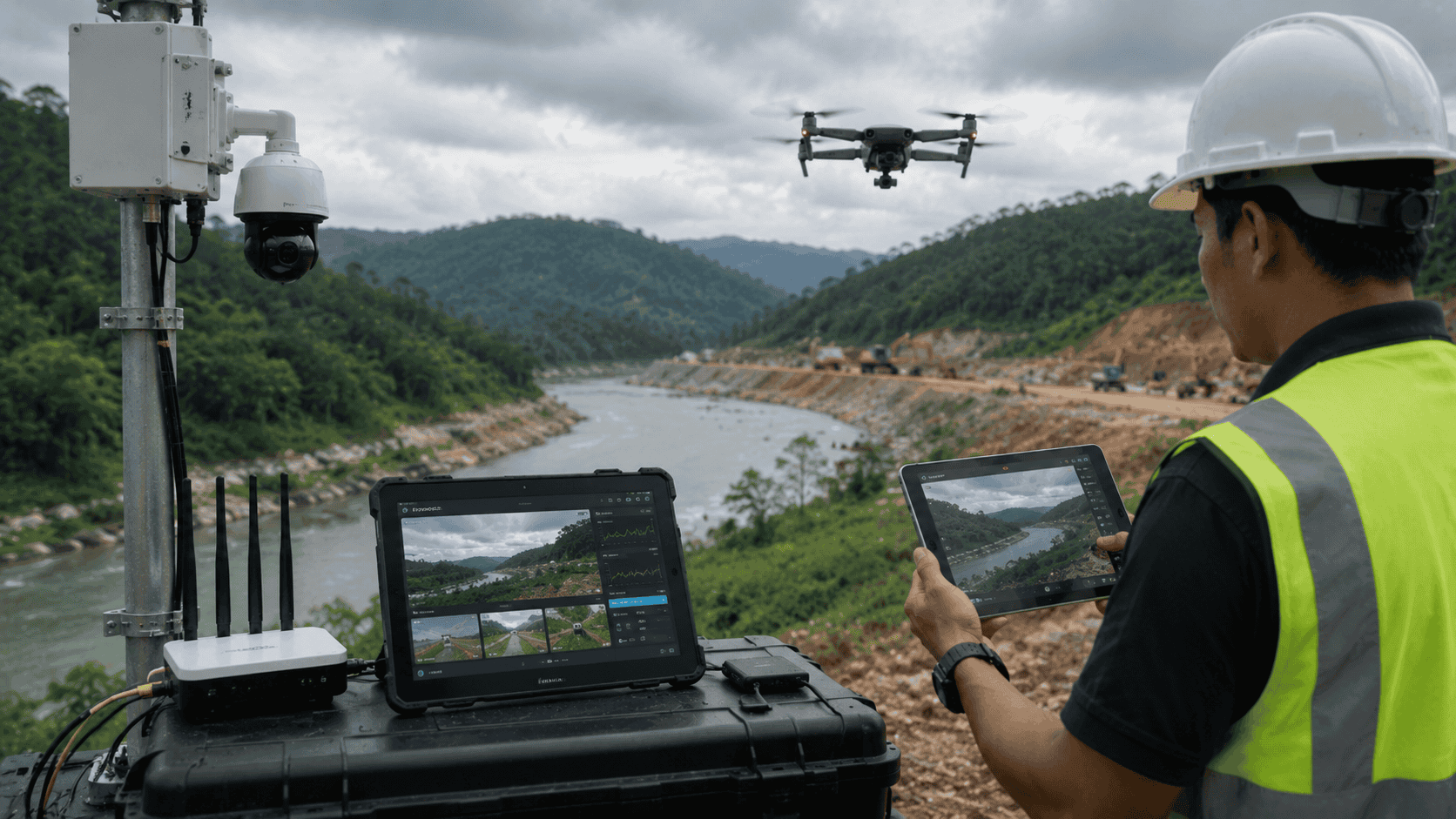
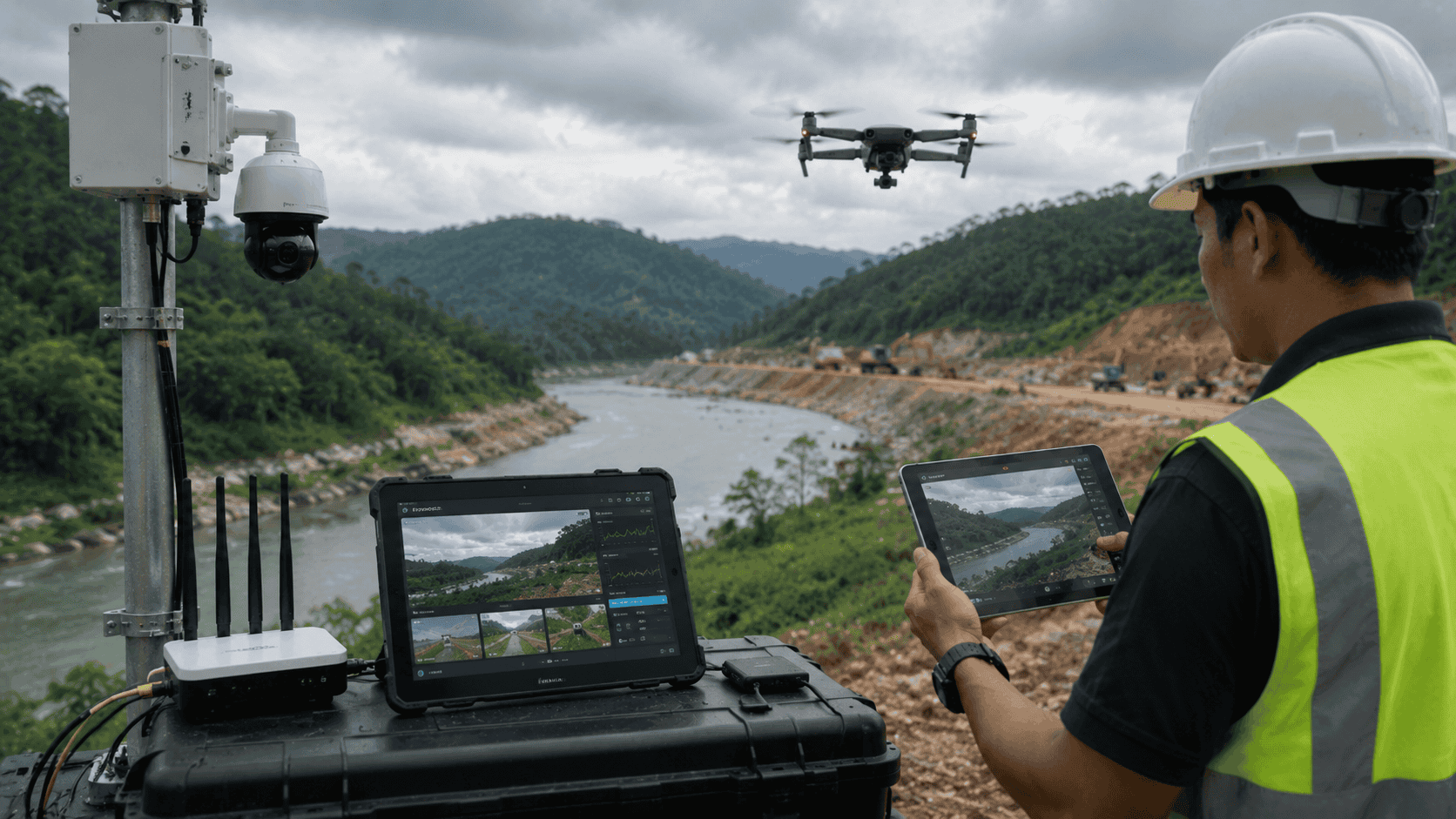
Ingenieum helps teams gain near real-time visibility over remote sites using low-latency video streaming, fixed cameras, drone live feeds, secure monitoring dashboards, and field connectivity infrastructure.
Why Delay Matters
For flood-prone locations, infrastructure sites, project sites, environmental monitoring, and critical field operations, long video delay can slow decision-making. Low-latency streaming helps operations teams view site conditions closer to real time.
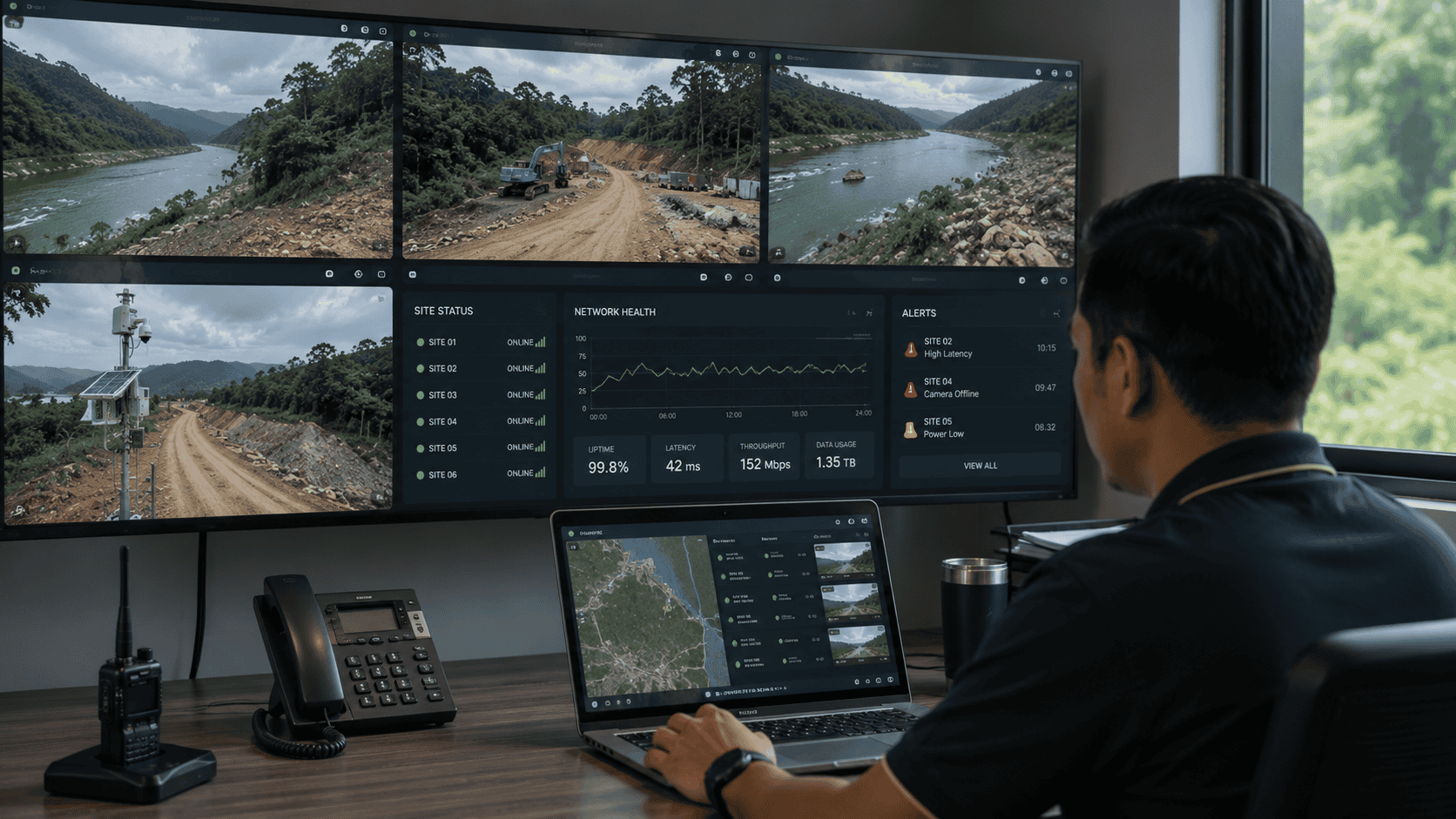
Ingenieum supports fixed camera live feeds, drone live feeds, assigned camera views, grid views, and secure monitoring dashboards as part of a broader remote site visibility layer.
Connectivity First
Before a video feed can be stable, the site needs practical connectivity. Ingenieum can support antennas, routers, multi-telco setup, and ISP bonding where a site needs better bandwidth availability or provider redundancy.
Operational Visibility
Low-latency video streaming can help teams check water levels, site access, equipment status, field progress, drone perspectives, and operational risks without waiting for manual reports.
FAQ
Low-latency video streaming reduces the delay between what happens on site and what the operations team sees through a camera feed or monitoring dashboard.
Lower delay helps teams understand site conditions faster, especially for flood-prone sites, infrastructure operations, critical field operations, and live drone or camera visibility.
Yes. Ingenieum can support fixed camera live feeds, drone live feeds, secure dashboard views, and the field connectivity needed for these systems to work.
Yes. Reliable field connectivity is the foundation for stable video streaming, especially when cameras or drones are located at remote or weak-coverage sites.
Remote site visibility means giving HQ, operations, or project teams visual access to site conditions without requiring constant physical presence.
Yes. Monitoring dashboards can be structured around assigned user access, company-level views, single-camera views, and grid views depending on the project requirements.
Talk to Ingenieum
Ingenieum can help assess the camera, dashboard, access control, streaming, and field connectivity requirements.